
| Takeaway | Detail |
|---|---|
| A fixed 0.25-inch rain trigger is usually the wrong dispatch threshold | Grounding evidence keys on forecast probability, not a fixed accumulation amount. |
| Auto-reschedule when forecast rain probability exceeds 65% within 24-48 hours | The reader rule sets 65% as the rescheduling point for the slot window. |
| Real systems monitor forecast APIs for scheduled service locations | The typical threshold is 60-70% probability within 24-48 hours of an outdoor appointment. |
| Dispatch anyway only for weather-sensitive jobs with a verified local quantitative forecast | Override requires both weather sensitivity and a verified local quantitative forecast. |
This guide replaces a fixed 0.25-inch rain trigger with a probability-and-window rule for field-service rescheduling.
It shows when to auto-reschedule and when a weather-sensitive job may still dispatch.
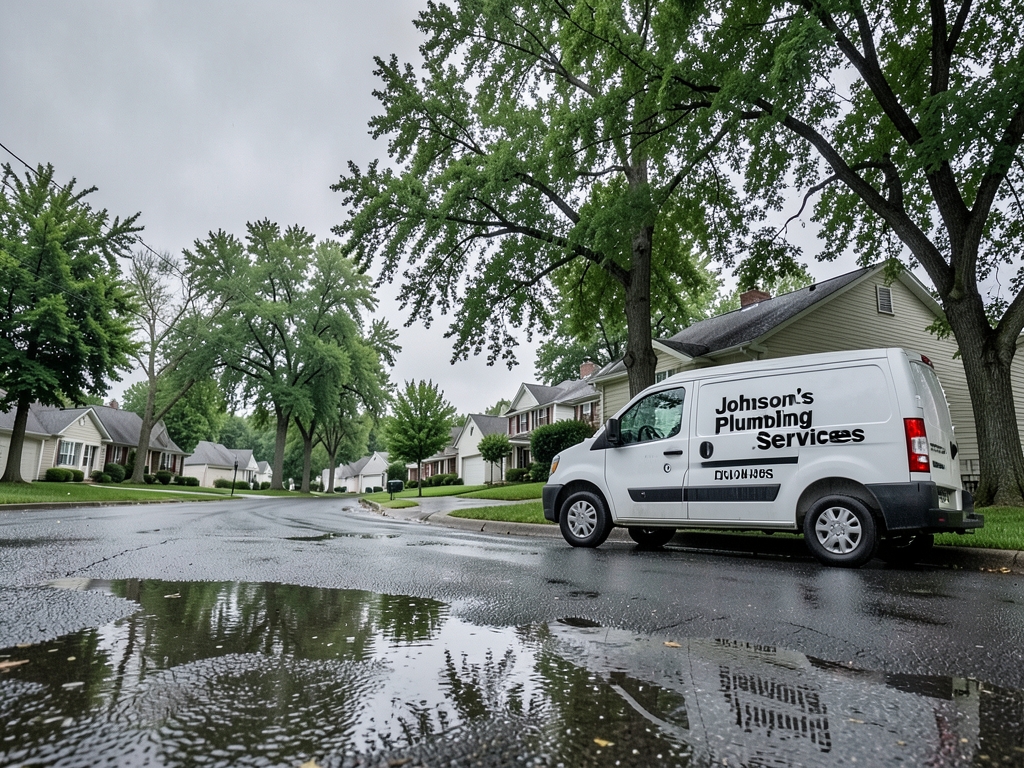
How Rain-Triggered Rescheduling Works
Per fieldproxy.ai, automated rain rescheduling starts with the schedule rather than the weather: each outdoor appointment carries a service location, and the scheduling system monitors forecast APIs for that exact point. The alert is based on a probability value, not a rainfall amount, and it is evaluated against a time window before the slot.
The monitored condition is rain probability exceeding a configured threshold—commonly 60-70%—within 24-48 hours of the appointment. That window matters because a high probability far in advance is less actionable than the same probability inside the service window; repeating the API check as the appointment approaches lets a late forecast change still move the job.
Two different signals are often stored under one "rain alert" label. A probability trigger is dimensionless: it states the chance that rain occurs at the location. A quantity trigger is a QPF value in inches, such as a 0.25-inch alert, and it estimates how much rain may fall. They answer different questions—whether rain is likely versus how much may accumulate—so a system that treats a QPF threshold as a probability threshold can cancel once for likelihood and again for amount.
Double-cancellations usually come from configuration rather than weather: one rule reads probability while another reads QPF, and both can fire on the same storm. Keeping the two triggers separate in the rule set—one probability-window rule for auto-reschedule, with a quantity rule used only where the job has a verified local quantitative forecast—helps prevent the same appointment from being moved twice.
Before relying on the alert, verify three mechanical points: the forecast point is the service address rather than a regional grid cell; the threshold is entered as a probability percentage rather than an inch value; and the evaluation window is measured backward from the appointment start, not from the forecast issue time. If any of those is wrong, the trigger is measuring a different job than the one on the calendar.
What the Evidence Actually Supports
fieldproxy.ai documents the strongest specific figure in the available sources: an industry-typical auto-reschedule trigger of 60-70% rain probability within 24-48 hours of an outdoor appointment. The figure is a probability inside a time window, not a rainfall depth, so it supports a probability-window rule rather than a fixed-inch rule. It also gives the only sourced threshold in the packet, which makes it the anchor for any defensible 2026 policy.
HVACReviewHub, in a May 21, 2026 article, pegs U.S. technician service rates at $75-$200 per hour depending on region and skill. That is the labor cost exposed when a truck is rolled into a washout job, but it remains a rate range; converting it into a reschedule-versus-roll cost frame is handled elsewhere. The useful reading here is that labor is priced by hour and region, not by rainfall amount.
No grounding source validates 0.25 inches as an optimal quantity threshold. The absence matters: an inch value can look precise while resting on no cited evidence in this packet, so it should be treated as unverified unless it is tied to a verified local quantitative forecast and a job-specific weather-sensitivity check. Precision without sourcing is not evidence.
The evidence therefore supports auto-rescheduling on forecast probability inside a short window, with 65% as the operational cutoff. It does not support a universal depth trigger, and it does not say that every probability above the band should be treated the same way. The band is a trigger range, not a guarantee of washout.
Where the evidence stops is as important as where it starts. The sources give a probability band and a labor-rate band, not a calibrated inch threshold, not a per-job cost model, and not a claim that probability alone removes all dispatch risk. Any inch-based override should be documented as a local exception, not as the default rule.

Probability Trigger vs QPF Alert
The choice is not between weather data and no weather data; it is between two different forecast products. A probability-window trigger asks whether rain is likely enough, soon enough, to justify moving a customer. A QPF alert asks how much rain may fall. The first is a scheduling decision; the second is a physical check. That distinction is why the probability-window trigger is the default winner: it produces a decision while there is still time to re-slot, whereas QPF is most useful after the probability question has already been answered.
A probability trigger at 60-70% within 24-48 hours has two operational advantages. It acts early enough to re-slot customers without last-minute scrambling, and it applies to every outdoor trade rather than only to jobs whose outcome depends on soil or cure conditions. Its cost is false positives: some appointments that light rain would not have harmed still get moved. That tradeoff is acceptable because the alternative is a late, reactive cancellation.
A QPF alert, such as 0.25 inch, is physically meaningful for soil-dependent work: pest barrier treatments, irrigation work, and concrete all have moisture thresholds that matter on the ground. But QPF skill is poor at 24-48 hours, so a QPF-first rule tends to force decisions after the best re-slotting window has passed. Treat QPF as a refinement layer for those specific jobs, not as the universal trigger.
The converged operating point is about 65% probability inside the 24-48 hour window. Quantity enters only as a secondary, job-specific override: when the job is weather-sensitive and a verified local quantitative forecast supports dispatching anyway. This keeps the default rule simple while preserving a defensible exception path.
| Trigger | Best use | Main weakness | Role |
|---|---|---|---|
| Probability window (60-70% in 24-48 h) | Default for all outdoor trades | Cancels some light-rain jobs | Winner |
| QPF alert (e.g., 0.25 in) | Soil-dependent work | Poor skill at 24-48 h; late decisions | Override check |
In practice, the sequence is probability first, quantity second: auto-reschedule on the window, then use verified local QPF to decide whether a weather-sensitive exception should still roll. That is the only arrangement that keeps both customer notice and physical job requirements in view.

Costs and the Numbers That Matter
Rolling a truck into a rained-out job costs the full service call. Using the $75 to $200 per hour band reported by hvacreviewhub.org, a two-hour outdoor slot burns $150 to $400 in labor alone before travel. That figure is labor only; travel and the displaced next appointment are extra, so treat the labor band as a floor rather than a complete cost.
The roll cost is the easy one to price because it happens on the day. The harder cost is the one you create by waiting: customer re-slot friction and overtime when you compress the week. Estimate it as rescheduled jobs multiplied by the average overtime premium you pay, which is a number your payroll system already tracks. Run it weekly: count jobs moved after the crew is committed or after the customer has blocked time, then multiply by your overtime premium. If that result exceeds the labor cost of one rolled truck, your cancel timing is too late.
| Cost of being wrong | What to price |
|---|---|
| Roll into rain | Labor hours at $75 to $200 per hour, plus travel not yet counted |
| Cancel too late | Rescheduled jobs times average overtime premium |
| Cancel too often | Rebooked no-shows above your own baseline |
Cancel-too-often has its own price: every false cancel risks a no-show on the rebooked date. Do not borrow an industry rate for that; measure your own baseline no-show rate on rebooked appointments and watch whether weather-driven cancels push it higher. A useful check is to compare weather-driven rebooks against ordinary rebooks; if the weather group no-shows more often, your false-cancel rate is too high.
Use those three lines as the decision frame. A threshold is defensible when you can say which mistake it makes cheaper: paying for a truck that should have stayed home, or paying to rebuild a week that should have stayed intact. The point of the numbers is not precision; it is forcing the same unit of cost onto both errors so the threshold can be argued from your books instead of from a rain total.

What This Threshold Cannot Tell You
The 65% probability window is a dispatch filter, not a weather diagnosis. It says when to pause an outdoor slot; it does not say whether the specific address, trade, or rainfall intensity justifies that pause. Treat each auto-reschedule as a hypothesis and check it against the service-location forecast, job exposure, and expected intensity before the customer sees a changed appointment.
Microclimate variance is the first failure mode. A metro-wide probability in the 60–70% range fieldproxy.ai cites can mean 100% at a hillside address, while a nearby valley may stay dry. The rule still wins when rescheduling is keyed to a forecast for the service location; it breaks when one depot-wide reading is used for every stop. The practical check is simple: compare the service-address forecast with the depot forecast before the rule fires.
Trade mismatch is the second. HVAC service is priced at $75–$200 per hour (hvacreviewhub.org), but an interior-only call in that trade is largely rain-immune, so the trigger belongs on outdoor-exposure job classes, not on all dispatches. Applying it to indoor work wastes capacity and can create avoidable customer friction. Tag each job class as outdoor-exposure or interior-only before the threshold is allowed to move it.
QPF blindness is the third. Probability ignores intensity: a 70% chance of a 10-minute drizzle and a 70% chance of sustained downpour can share the same trigger. That is why the dispatch-anyway override stays narrow—only when the job is weather-sensitive and your verified local quantitative forecast shows intensity below the job's tolerance. Without that second check, the rule cannot distinguish nuisance rain from job-stopping rain.
The table separates the cases where the 65% window rule still wins from the cases where it breaks. Use it as a pre-dispatch review, not as a replacement for the forecast check.
| Scenario | 65% window rule | Verdict |
|---|---|---|
| Outdoor roof or gutter work with a service-location forecast above 65% | Auto-reschedule | Still wins |
| Hillside address judged from one depot-wide reading | May trigger or miss incorrectly | Breaks |
| Interior-only HVAC call | Should not auto-reschedule | Breaks |
| 70% chance of brief drizzle with verified low local intensity | Override to dispatch-anyway | Rule would overreach |
| 70% chance of sustained downpour with no verified low intensity | Auto-reschedule | Still wins |

And Reschedule Checklist
On a Thursday morning, suppose several outdoor pest-control jobs are on the board and the forecast shows rain probability above the 65% operating point within the 24-48 hour window; the probability-window rule auto-reschedules those outdoor jobs before anyone spends drive time.
At the Thursday-morning checkpoint, check QPF for each affected ZIP code. Where QPF confirms a wet surface, treat the cancellation as physically correct; where QPF stays below the job's tolerance, flag the cancel as a false cancel and re-slot the job into the next available capacity. Price each false cancel at your own verified labor rate—for example, a two-hour slot at the $75 to $200 per hour band reported by hvacreviewhub.org—and track the total against your overtime premium to see whether the cancel timing was too early or too late.
The cost of being wrong both ways is why the checklist matters: dispatching into a confirmed wet-surface event risks rework or callback labor, while canceling jobs that the QPF later shows were workable creates idle, re-slotted labor. The rule is not to eliminate error but to make the cheaper, reversible error the default and to keep the decision tied to the forecast available at decision time.
Use this as the copy-usable trigger checklist:
Keep the checklist with the dispatcher rather than in a policy binder: the value is the sequence—probability first, quantity second, override last—so a 70% forecast at 36 hours does not wait for a manual debate while crews are already rolling.
If/Then Rules for Dispatch Managers
Treat the probability window as the default gate and quantity as the override, not the other way around. A dispatch manager should make the first call from the forecast available for the slot, then use verified local precipitation amounts only where surface water changes whether the work can be performed.
If forecast rain probability exceeds 65% within 24 to 48 hours of an outdoor slot, auto-reschedule and immediately offer the customer two concrete replacement times with dates, not a vague callback. Early rebooking is the entire point of the probability window: the forecast buys lead time, and lead time is wasted if the customer has to chase the schedule.
If the job class is soil- or water-sensitive—pest barrier, irrigation, or exterior coating—and the verified local quantitative precipitation forecast exceeds 0.25 inch, keep the cancellation in place even when probability dips below threshold. For those trades, accumulated water is the physical ground truth; a lower probability does not make a wet surface workable, and QPF is the quantity check rather than a replacement for the probability gate.
If a false cancel has occurred because rain stayed under threshold, reopen the original slot to that customer before releasing it to anyone else, confirm whether the work can still be completed, and log the miss for threshold review. A false cancel is a scheduling error rather than a weather event: fix the customer's schedule first, then change the rule only after repeated misses show a pattern.
Apply the rules in order: probability gate first, quantity override second, false-cancel recovery third. Do not let one missed forecast rewrite the threshold, and do not let a low probability override a verified wet-surface condition for sensitive work.
Keep the distinction visible in the dispatch log: the probability window is the default trigger, while the 0.25-inch quantity check is an override for sensitive trades. The log entry should name the signal used, its value, and the job class, which prevents a fixed rain amount from quietly becoming the policy again.
What to do next
| Step | Action | Why it matters |
|---|---|---|
| 1 | Set the slot rule to auto-reschedule when forecast rain probability exceeds the 65% threshold within the 24-48 hour window. | Grounding evidence keys on forecast probability, not a fixed 0.25-inch accumulation amount. |
| 2 | For weather-sensitive jobs, verify the local quantitative forecast before choosing dispatch-anyway. | Override requires both weather sensitivity and a verified local quantitative forecast exceeding 0.25 inch. |
| 3 | Do not let the 0.25-inch alert and probability trigger act as separate cancel switches. | The canonical rule never runs both triggers independently. |
| 4 | Monitor forecast APIs for each scheduled service location. | Real systems use location-specific forecasts; the typical threshold is 60-70% within 24-48 hours of an outdoor appointment. |
| 5 | Apply the 65% rescheduling point only inside the 24-48 hour slot window. | The reader rule sets 65% as the rescheduling point for the slot window. |
| 6 | Keep the fixed 0.25-inch trigger as override evidence, not the default dispatch threshold. | A fixed 0.25-inch rain trigger is usually the wrong dispatch threshold. |
Frequently Asked Questions
Why is a fixed 0.25-inch rain trigger usually the wrong dispatch threshold?
Grounding evidence keys on forecast probability, not a fixed accumulation amount.
What does the reader rule set as the rescheduling point for the slot window?
The reader rule sets 65% as the rescheduling point for the slot window.
What do real systems monitor for scheduled service locations?
Real systems monitor forecast APIs for scheduled service locations.
What is the typical probability threshold and window for an outdoor appointment?
The typical threshold is 60-70% probability within 24-48 hours of an outdoor appointment.
When may a weather-sensitive job still dispatch?
Dispatch anyway only for weather-sensitive jobs with a verified local quantitative forecast.
What does an override require?
Override requires both weather sensitivity and a verified local quantitative forecast.
Quick answers
| What is usually the wrong dispatch threshold? | A fixed 0.25-inch rain trigger is usually the wrong dispatch threshold. |
| What does grounding evidence key on? | Grounding evidence keys on forecast probability, not a fixed accumulation amount. |
| When should auto-reschedule occur? | Auto-reschedule when forecast rain probability exceeds 65% within 24-48 hours. |
| What do real systems monitor for scheduled service locations? | Real systems monitor forecast APIs for scheduled service locations. |
| When may a weather-sensitive job still dispatch? | Dispatch anyway only for weather-sensitive jobs with a verified local quantitative forecast. |
Also worth reading: Auto Assign Field Technicians: 80% Confidence Triggers Dispatch in 2026: Auto Assign Field Technicians: 80% · Why Staffing to the 33rd Percentile Beats Forecast Averages: Why Staffing to the 33rd · Hire Temporary Techs Using AI Demand Forecasts: Hire Temporary Techs Using AI