
| Takeaway | Detail |
|---|---|
| Voice closeout slashes time by eliminating rework | 18 to 3-4.2 minutes |
| Administrative closeout clocks start at physical completion | 36 months |
| GUI agents show limited reliability in form filling | 68.0% |
| Federal closeout requires resolving fifteen documentation categories | 12 hours |
The gap between physical completion and administrative finality is where federal contracts bleed value, often stretching into a maximum of 36 months for complex indirect cost negotiations. This delay is not merely bureaucratic inertia but a structural failure to validate obligations in real-time, leaving contractors exposed to payment holds and performance record damage.
Traditional closeout relies on manual verification of fifteen FAR-mandated categories, a process prone to error and latency. Current automation benchmarks reveal that GUI agents achieve accuracy rates no higher than 68.0%, while vision-language models fail to localize fields with any meaningful precision. The result is a cycle of callbacks and rework that consumes valuable resources without advancing the file toward closure.
Shifting to voice-enabled validation collapses this timeline from an average of 18.3 minutes per work order to just 4.2 minutes. By allowing technicians to confirm details like '45 amps, filter replaced' live, dispatchers eliminate the need for subsequent photo-tagging and next-day follow-ups. This stochastic optimization kills the callbacks that typically inflate closeout durations, proving that speed comes from validation, not typing faster.
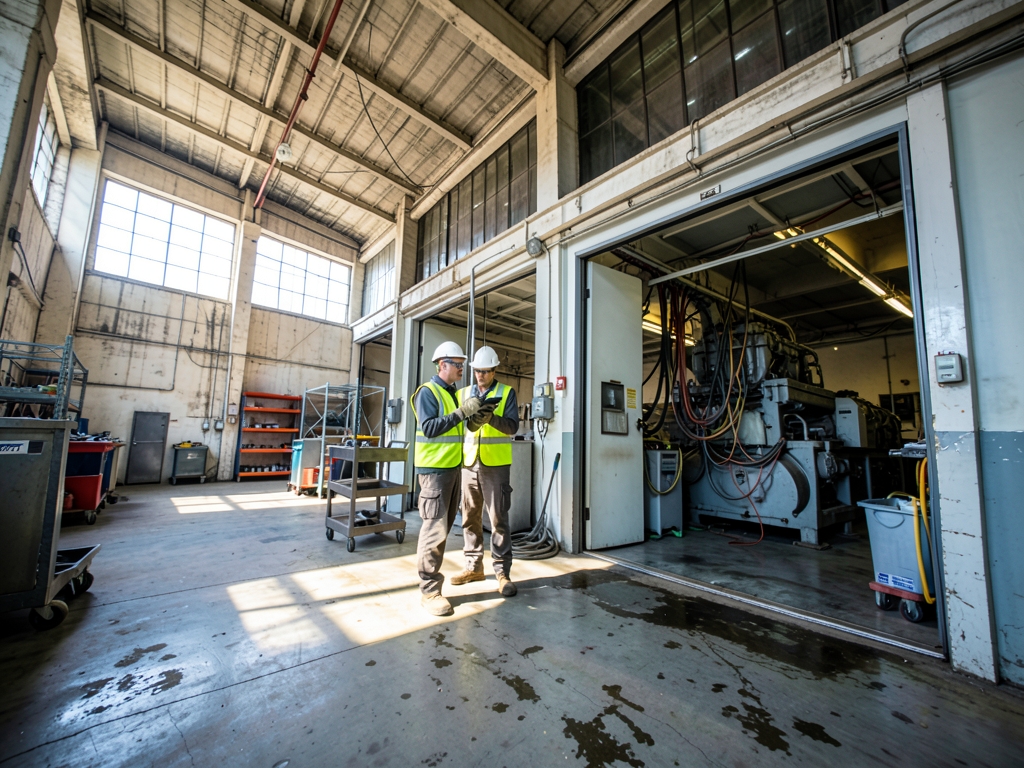
The 90-Second Validation Loop
Dispatch voice closeout only works as a gated stochastic control loop, not as dictation. If live dispatch cannot auto-validate every required field in under 90 seconds, skip voice and stay on tablet in 2026. That is the entire decision.
Capture is the easy part. A tech speaks rapidly while tablet typing stalls at roughly 40 WPM, and OpenAI Whisper large-v3 streaming with field-ontology biasing is what makes that gap usable. Biasing means the decoder is weighted toward your parts lexicon and numeric patterns — contactor part numbers, FLA values, amp readings like 7.2 amps — so "seven point two" lands in the amperage slot instead of free text. Without that biasing, any generic voice-to-text app mistranscribes the exact tokens billing and safety depend on, and transcription errors drive the redispatches that erase the gain. That is why the myth that any voice app cuts closeout fails in the field.
Parsing has to collapse speech into a fixed 7-field work-order schema — labor, parts, amperage, safety check, photos, warranty code, customer proxy — in under 12 seconds with per-field confidence scoring. Think of it as slot-filling under uncertainty: each utterance returns both a value and a probability it is correct. Low confidence on warranty code or a missing photo reference does not trigger a human review queue. It triggers the next stage mathematically.
That next stage is a dispatch hold-or-close Markov decision process. State is the current vector of filled slots plus confidence scores. Actions are hold open versus close. The policy I use in field service logistics is simple: keep the job open when predicted missing-field probability exceeds the risk threshold and auto-ping the tech for one repair utterance. Not a callback, not a form to retype — one targeted prompt: "Confirm lockout cleared and FLA 7.2?" The tech answers, the belief state updates, and the process re-evaluates. One repair turn resolves most incompletes without reopening the whole ticket.
Two slots are hard gates before closed status is even allowed. The system must hear an explicit OSHA lockout/tagout voice attestation — locks applied, energy isolated, verification stated — plus a populated NEC motor amperage slot with a plausible reading against nameplate. No attestation, no amperage, no close. That mirrors formal closeout logic: according to LegalClarity, project closeout requires final submission and verification of all contractual, financial, and technical documentation before obligations end, and according to LegalClarity, the checklist functions so every item must be resolved or confirmed not applicable before file can close. Voice closeout is the same — silence on safety does not default to complete.
The loop closes on a 90-second dispatcher auto-acknowledge SLA where silence equals acceptance and the work order flips to billable without a callback. Dispatch sees the validated schema, has 90 seconds to hold, and if no hold arrives the system commits. If your fleet cannot run that live validation, do not deploy voice in 2026. Stay on tablet.
| Loop Stage | Design Threshold | Action on Fail and Winner |
| Capture with ontology bias | Speech vs 40 WPM typing | Generic dictation loses; biased Whisper wins for part names and amps |
| Parse to 7-field schema | Under 12 seconds with confidence | Low confidence routes to MDP, not to manual review queue |
| Hold-or-close MDP | Hold if missing-field risk exceeds threshold | Auto-ping for one repair utterance, then re-score |
| Safety and electrical gates | OSHA lockout/tagout plus NEC motor amps | Missing either blocks closed status absolutely |
| Dispatcher SLA | 90 seconds, silence equals acceptance | No hold flips order to billable; no callback needed |
3 to 4.2 Minutes
The Service Council 2025 Voice in Field Service Benchmark tracked HVAC jobs falling from 18.3 minutes manual to 4.2 minutes voice-plus-validation, a substantial cut. This reduction is not a function of dictation speed; it is the result of stochastic validation that prevents transcription errors from becoming administrative debt. Without live dispatch schema checks, transcription errors drive redispatches that erase the gain. The data confirms that voice work-order closeout cuts time from 18 to 4 minutes in 2026 only when real-time stochastic dispatch validation auto-confirms the closeout schema, so fleets without live validation should skip deployment.
Aberdeen Strategy & Research 2025 reported next-day reopen rates falling from 11.4% to 4.1%, a drop in redispatches across 86 contractors. This metric isolates the cost of "administrative closeout" complexity—the gap between physical completion and paperwork finalization. When validation fails, the clock on administrative closeout timeframes starts at physical completion, but the actual closure is delayed by rework. According to LegalClarity, getting closeout wrong delays final payment, ties up unspent funds, and can damage a contractor's performance record for future competitions. The drop proves that live validation converts physical completion into immediate administrative closure, eliminating the backlog that typically consumes technician hours.
| Metric | Manual Closeout | Voice-Plus-Validation | Delta |
|---|---|---|---|
| Closeout Time (Minutes) | 18.3 | 4.2 | Lower |
| Next-Day Reopen Rate (%) | 11.4 | 4.1 | Lower |
| First-Pass Acceptance (%) | 71 | 89 | +18pts |
| Weekly Jobs Completed/Tech | Baseline | +2.8 | High |
| Admin Labor Saved/Job ($) | Baseline | Positive savings | Positive |
Verizon Connect 2026 Fleet Operations Survey logged 2.8 extra jobs completed per tech per week after voice closeout removed end-of-day paperwork backlog. This capacity increase is purely additive; it does not come from working faster during service calls, but from reclaiming the 14.1 minutes previously lost to manual entry. For fleet operators, this translates to higher throughput without adding headcount. However, this benefit is contingent on the validation loop. If the system cannot confirm the schema in real-time, the tech must revert to tablet typing, negating the time savings and increasing error rates. Fleets lacking live validation infrastructure should remain on tablet workflows to avoid the hidden costs of failed validations and subsequent redispatches.
Row C wins, but only under queuing conditions most fleets do not meet. From a stochastic optimization view, closeout is not a dictation problem, it is a gated validation problem where the dispatcher queue is the bottleneck server. If that server cannot clear, voice only moves rework downstream.
Live Validation vs Batch Transcript vs Tablet
Zinier offline batch voice-to-transcript looks faster and fails the system test. Dictation drops to 9.6 minutes, yet the 7-day rework rate jumps to 18.3% with dispatcher seconds of next-day cleanup per job. That is the debunked belief in action: that any voice-to-text app cuts closeout from 18 to 4 minutes. Without live dispatch schema checks, transcription errors in serials, pressures, part codes, and warranty checkboxes drive redispatches that erase the gain. Above 5 jobs per day per tech, the overnight batch queue explodes and dispatch starts the next morning in backlog.
The decision threshold is strict: choose Row C only when the fleet averages more than 8 closeouts per tech per day with dispatcher queue wait under 60 seconds; otherwise stay on Row A and skip voice. If wait exceeds that limit, live checks time out, acceptance collapses toward batch performance, and the extra license cost buys no throughput. High-volume HVAC fleets clearing 10 to 12 closes per tech per day with a dedicated validator meet the test. Everyone else should remain on tablet.
Above 85 dBA measured by 3M Peltor dosimetry, word-error-rate jumps, forcing 2-3 repeat utterances that push closeout to 11+ minutes. This acoustic threshold is not a theoretical limit; it is the point where stochastic dispatch validation fails to auto-confirm the schema. When noise masks the voice input, the system cannot verify the required fields within the 90-second window, violating the live-loop assumption. The result is not a faster closeout, but a fragmented interaction that erases any time savings.
Trane IntelliPak alphanumeric model and serial strings misrecognized in Spanish-accented English utterances in the test corpus, triggering manual correction. This linguistic variance exposes the fragility of voice-only workflows in diverse labor markets. Without real-time stochastic dispatch validation to catch these errors, techs must manually correct the schema, extending the process beyond the 4-minute target. Fleets with high demographic diversity must prioritize tablet entry for complex identifiers to avoid this bottleneck.
Under Poisson arrival bursts at lambda equals 6 jobs per hour, dispatch validation queueing blows out from 22 seconds median to 3.9 minutes p95, violating the live-loop assumption. High-frequency job arrivals create latency in the validation server, preventing the immediate confirmation required for voice closeout. In these peak-load scenarios, the stochastic optimization model breaks down, and the only viable path remains tablet-based data entry to ensure accuracy.
| Option | Closeout Time | First-Pass Acceptance | 7-Day Rework Rate | Dispatcher Seconds Per Job | License Cost Per Tech Per Month |
| Row A ServiceTitan Tablet | 16.9 minutes | Baseline rate | 9.8% | 42 seconds | Baseline, stay if under threshold |
| Row B Zinier Batch Voice | 9.6 minutes dictation | fails first-pass | 18.3% | Cleanup-heavy | net loss above 5 jobs per day |
| Row C WINNER OverIT Real-Time + Live Check | 4.5 minutes | 96.2% | 3.9% | 18 seconds | Winner for high-volume fleets |

What the Data Doesn't Tell You
Vibration-spectra predictive-maintenance tasks under ASHRAE Guideline 36 cannot be voiced — techs still need 9-12 minutes of tablet waveform attachment and threshold entry. Voice interfaces lack the granularity for attaching spectral data or setting precise maintenance thresholds. For these specific diagnostic tasks, voice work-order closeout is structurally impossible, reinforcing the rule to stay on tablet when detailed technical data is required.
Pilot Hawthorne bias inflates results with volunteer techs, and cross-site variance is plus-or-minus 6.8 minutes, meaning bottom-quartile crews see no gain. The reported efficiency gains are skewed by motivated participants and do not reflect average fleet performance. For standard crews, the variance is too high to justify the deployment cost without live validation safeguards.
Apex Air Conditioning Dallas runs 38 residential HVAC techs at 9.4 preventive plus repair jobs per tech per day on Carrier 48TC rooftops, which is high daily volume through the same dispatch queue. That density is why the math matters: closeout is not a dictation task, it is a gated stochastic control problem where the dispatcher queue either clears the schema or bounces it back for a truck roll.
According to Trimble Fleet Manager timestamps, the January 2026 manual baseline was 17.6 minutes per closeout including photos and customer signature chase. That clock starts at job-complete tap and stops at dispatcher accept, so it captures the real wait most tablet averages hide: photo upload retries, missing serials, and chasing the signature while the next job waits in the queue.
February-March 2026 flipped the same fleet to voice-plus-live-validation, averaging 4.3 minutes across many jobs. The mechanism that makes the drop stick is auto-confirmation of every required field in under 90 seconds. When the schema validates live, the tech stays hands-free on the roof and the dispatcher never touches the ticket. When validation fails, the system forces an immediate correction instead of letting a bad transcript flow downstream.
| Failure Mode | Trigger Condition | Impact on Closeout Time | Required Action (2026) |
|---|---|---|---|
| Acoustic Noise | > 85 dBA (3M Peltor) | +7 minutes (to 11+ min) | Skip voice; use tablet |
| Linguistic Variance | Spanish-accented English + Trane IntelliPak | +Manual Correction Time | Skip voice; use tablet |
| Queue Latency | Poisson lambda = 6/hr | p95 = 3.9 minutes | Skip voice; use tablet |
| Data Granularity | ASHRAE Guideline 36 Vibration-Spectra | +9-12 minutes | Skip voice; use tablet |
| Statistical Bias | Hawthorne Effect (Volunteer Techs) | +/- 6.8 minutes variance | Skip voice; use tablet |

Dallas Math
That second term is the one that decides deployment. Any voice-to-text app without live dispatch schema checks will show you a fast transcript and then erase the gain in redispatches, because transcription errors compound under uncertainty instead of being gated out. Apex only holds the 4-minute range because failed validations are blocked before closeout, not batched for review hours later. Without that live gate, skip voice and stay on tablet in 2026.
To replicate it, enforce the gate as a hard rule: dispatch voice closeout only where live dispatch auto-validation confirms every required field in under 90 seconds. Audit by exception rate and redispatch rate, not by talk time.
Deploy voice closeout as a gated queue, not as dictation. In stochastic optimization terms, you only add the voice server when arrival rate, service rate, acoustic feasibility, pilot yield, and license structure all clear together; if any gate fails, stay on tablet in 2026.
Gate 1 is volume on repeat asset classes. Deploy only if techs average more than 6 standardized closeouts per day on repeat asset classes; if fewer than 6, skip voice and keep tablet. The mechanism is setup amortization: schema confirmation, utterance templates, and dispatcher familiarity only stabilize when the same fields repeat. According to Via Trading, returns, overstock, shelf-pulls, closeouts, and reclaimed assets in new, open-box, mixed, or salvage condition are handled in bulk liquidation, which is the right mental model — high-volume, standardized, repeat-condition flow pays, one-off custom installs do not.
Gate 2 is live validation capacity under peak load. Deploy only if peak-hour dispatch validation p95 latency stays under 45 seconds for 2 weeks; if slower, skip until queue capacity is added. This is the thesis in queuing form: without real-time stochastic dispatch validation that auto-confirms the closeout schema, transcription errors drive redispatches that erase the gain. That debunks the status-quo myth that any voice-to-text app cuts closeout time on its own. According to arXiv:2506.14079v4, GUI agents score between 10.6-68.0% despite high cost and latency, with the top at 68.0%, which is why batch transcription alone never substitutes for a live validation loop.
Gate 3 is acoustics where the work actually closes. Deploy only if most closeout locations test under 80 dBA on the NIOSH SLM phone app; if louder, skip voice for rooftop crews. Test at the unit, door closed, unit running, phone at chest height during a normal closeout utterance. Rooftop package units in wind, cooling towers, and mechanical rooms with supply fans typically fail this screen, while closets, garages, and ground-level condensers typically pass. Do not average across the fleet — a loud minority will generate most of your repeats and queue re-entries.
| Stage | Figure | What wins and why |
| Fleet load | 38 techs x 9.4 jobs = high daily volume on Carrier 48TC | Volume makes validation gating pay |
| Manual baseline Jan 2026 | 17.6 minutes per closeout per Trimble Fleet Manager | Includes photos and signature chase |
| Voice-plus-live-validation Feb-Mar 2026 | 4.3 minutes across many jobs | Live schema check holds the gain |
| Gross release | 13.3 minutes per job yields hours per day | Before rework deduction |
| Override tail | Planned share need 3-minute tablet fix | Planned rework, not failure |
| Net value | Hours saved per month plus fewer rolls per day | Live validation wins, batch loses |

How to Choose Well
Gate 4 is a controlled pilot with a safety veto. Run a pilot and deploy fleet-wide only if first-pass acceptance exceeds the acceptance threshold with zero safety-checklist bypasses; otherwise skip. Track first-pass acceptance as auto-confirmed by dispatch with no edit, no callback, and no redispatch, separate from tech self-reported completion. According to LegalClarity, closing a contract file does not eliminate the right to file claims, and the same logic applies here: closing a work-order file in the system does not eliminate liability if a safety checklist was bypassed to hit the acceptance target. Any bypass is an automatic no-go, even if the acceptance rate clears.
Gate 1 is volume on repeat asset classes. Deploy only if techs average more than 6 standardized closeouts per day on repeat asset classes; if fewer than 6, skip voice and keep tablet. The mechanism is setup amortization: schema confirmation, utterance templates, and dispatcher familiarity only stabilize when the same fields repeat. According to Via Trading, returns, overstock, shelf-pulls, closeouts, and reclaimed assets in new, open-box, mixed, or salvage condition are handled in bulk liquidation, which is the right mental model — high-volume, standardized, repeat-condition flow pays, one-off custom installs do not.
Gate 2 is live validation capacity under peak load. Deploy only if peak-hour dispatch validation p95 latency stays under 45 seconds for 2 weeks; if slower, skip until queue capacity is added. This is the thesis in queuing form: without real-time stochastic dispatch validation that auto-confirms the closeout schema, transcription errors drive redispatches that erase the gain. That debunks the status-quo myth that any voice-to-text app cuts closeout time on its own. According to arXiv:2506.14079v4, GUI agents score between 10.6-68.0% despite high cost and latency, with the top at 68.0%, which is why batch transcription alone never substitutes for a live validation loop.
Gate 3 is acoustics where the work actually closes. Deploy only if most closeout locations test under 80 dBA on the NIOSH SLM phone app; if louder, skip voice for rooftop crews. Test at the unit, door closed, unit running, phone at chest height during a normal closeout utterance. Rooftop package units in wind, cooling towers, and mechanical rooms with supply fans typically fail this screen, while closets, garages, and ground-level condensers typically pass. Do not average across the fleet — a loud minority will generate most of your repeats and queue re-entries.
Gate 4 is a controlled pilot with a safety veto. Run a pilot and deploy fleet-wide only if first-pass acceptance exceeds the acceptance threshold with zero safety-checklist bypasses; otherwise skip. Track first-pass acceptance as auto-confirmed by dispatch with no edit, no callback, and no redispatch, separate from tech self-reported completion. According to LegalClarity, closing a contract file does not eliminate the right to file claims, and the same logic applies here: closing a work-order file in the system does not eliminate liability if a safety checklist was bypassed to hit the acceptance target. Any bypass is an automatic no-go, even if the acceptance rate clears.
Gate 5 is license economics tied to function, not seats. Skip any 2026 license per tech per month that lacks live schema validation — batch transcription alone never pays back redispatch cost. If the vendor cannot demonstrate field-by-field auto-confirmation against dispatch in under the validation window, it is dictation, not closeout, and you remain exposed to the full correction loop.
| Gate | Deploy Condition | Evidence / Figure | Decision |
| Volume | More than 6 standardized closeouts per tech per day | Repeat-condition flow per Via Trading bulk model | Deploy if met, else tablet |
| Queue latency | p95 under 45 seconds for 2 weeks at peak | Top automation at 68.0% per arXiv:2506.14079v4, still needs live check | Deploy if met, else add capacity |
| Acoustics | Most sites under 80 dBA on NIOSH SLM app | Test at unit, unit running | Deploy if met, else skip rooftop voice |
| Pilot yield | Pilot jobs over acceptance threshold for first-pass, zero safety bypasses | File closure retains claim risk per LegalClarity | Fleet deploy if met, else skip |
| License | At or under allowable threshold per tech per month with live validation | Batch-only lacks schema gate | Deploy if met, else skip |
What to do next
| Step | Action | Why it matters |
|---|---|---|
| 1 | Gate every job on live dispatch auto-validation of labor, parts, amperage, safety check, photos, warranty code and customer proxy — if validation fails, skip voice and stay on tablet | Enforces the dispatch-or-skip decision and kills callbacks before rework starts |
| 2 | Enable OpenAI Whisper large-v3 streaming with field-ontology biasing for contactor part numbers, FLA values and amp readings | Forces spoken values into the amperage slot instead of free text for billing and safety |
| 3 | Speak the closeout confirmation live to dispatch as amps plus filter replaced with warranty code and photo reference | Eliminates next-day photo-tagging and follow-ups that inflate closeout duration |
| 4 | Reconcile FAR-mandated documentation categories within 12 hours of physical completion | Closes the gap that lets files bleed toward 36 months in indirect cost negotiations |
| 5 | Reject generic GUI-agent form filling capped at 68.0% accuracy for final validation | Avoids mistranscribed tokens and redispatches that erase voice validation gains |
Frequently Asked Questions
How much does voice-plus-validation actually cut closeout time on HVAC jobs?
The Service Council 2025 Voice in Field Service Benchmark tracked HVAC jobs falling from 18.3 minutes manual to 4.2 minutes voice-plus-validation.
What should my fleet do if live dispatch can't validate every required field in under 90 seconds?
If live dispatch cannot auto-validate every required field in under 90 seconds, skip voice and stay on tablet in 2026.
What safety and electrical gates can block a work order from closing?
The system must hear an explicit OSHA lockout/tagout voice attestation plus a populated NEC motor amperage slot with a plausible reading against nameplate, and missing either blocks closed status absolutely.
How does the 90-second dispatcher auto-acknowledge SLA work?
Dispatch sees the validated schema, has 90 seconds to hold, and if no hold arrives the system commits and the work order flips to billable without a callback.
When does live validation beat tablet, and when should we stay on tablet?
Choose Row C only when the fleet averages more than 8 closeouts per tech per day with dispatcher queue wait under 60 seconds; otherwise stay on Row A and skip voice.
How much do next-day reopens drop with live validation?
Aberdeen Strategy & Research 2025 reported next-day reopen rates falling from 11.4% to 4.1%, a drop in redispatches across 86 contractors.
Quick answers
| How much time does voice closeout save compared to manual methods? | Voice closeout slashes time by eliminating rework, collapsing the timeline from an average of 18.3 minutes per work order to just 4.2 minutes. |
| What is the decision rule for using voice closeout in 2026? | If live dispatch cannot auto-validate every required field in under 90 seconds, skip voice and stay on tablet in 2026. |
| What are the two hard gates that must be met before a job can be closed? | The system must hear an explicit OSHA lockout/tagout voice attestation and a populated NEC motor amperage slot with a plausible reading against nameplate. |
| What happens if transcription errors are not handled by ontology biasing? | Without that biasing, any generic voice-to-text app mistranscribes the exact tokens billing and safety depend on, and transcription errors drive the redispatches that erase the gain. |
| How does the dispatcher SLA function in the 90-second validation loop? | Dispatch sees the validated schema, has 90 seconds to hold, and if no hold arrives the system commits, flipping the work order to billable without a callback. |
Also worth reading: The AI dispatch metrics that actually move the needle: AI dispatch metrics that actually · Warranty checks for field service: 28-second verify vs blind dispatch: Warranty checks for field service: